Countertop Trends: Modern Kitchen Styles, Materials & Design Ideas
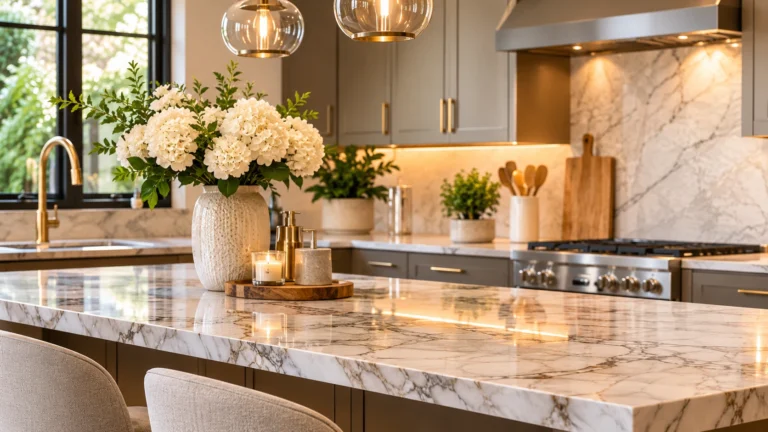
Today’s countertop trends are moving beyond the era of perfectly uniform kitchens towards spaces that feel more personal, inviting, and connected to nature. In my experience, the most successful kitchen countertop trends balance visual appeal with everyday practicality, allowing kitchen surfaces to shape the character of individual spaces. While white surfaces and sophisticated quartz remain popular, warm quartzite, expressive natural stone, and full-height slab backsplashes are bringing more movement, texture, and depth into contemporary kitchen design. These materials create everything from warm kitchens and natural kitchens to ultra-cool kitchens, with veining, stone veining, and carefully selected surface patterns adding personality to the overall palette. Whether choosing marble, soapstone, or other durable materials, homeowners and designers are embracing warm tones, distinctive surface texture, and natural materials to create considered kitchens, architectural kitchens, and personal kitchens that reflect individual lifestyles and kitchen aesthetics.
When planning a kitchen renovation, building a kitchen, or undertaking kitchen construction, understanding these evolving countertop styles can help avoid common faux pas, particularly when selecting impractical materials or following dated countertops and outdated countertop styles without considering long-term needs. From ground-up kitchen design to kitchen remodeling and smaller renovation projects, interior designers are exploring six countertop styles, combining materials and silhouettes, alternative materials, and modern surfaces to achieve more expressive surfaces throughout kitchen interiors. Homeowners seeking more inspiration can also explore these countertop design ideas for a closer look at modern materials, colors, and finishes. A thoughtful approach to countertop design considers design attitude, surface finishes, kitchen personality, and countertop selection, ensuring that functional surfaces complement kitchen architecture rather than compete with it. Ultimately, the right countertop trends should support a cohesive color palette, timeless styles, and an individual design that feels as practical as it is beautiful.
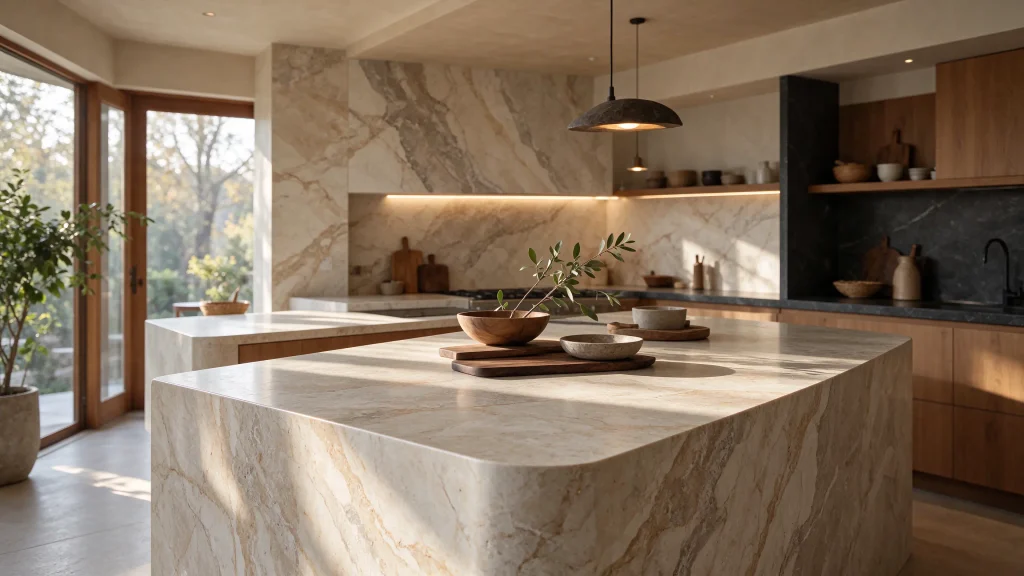
Waterfall Islands and Modern Countertop Design
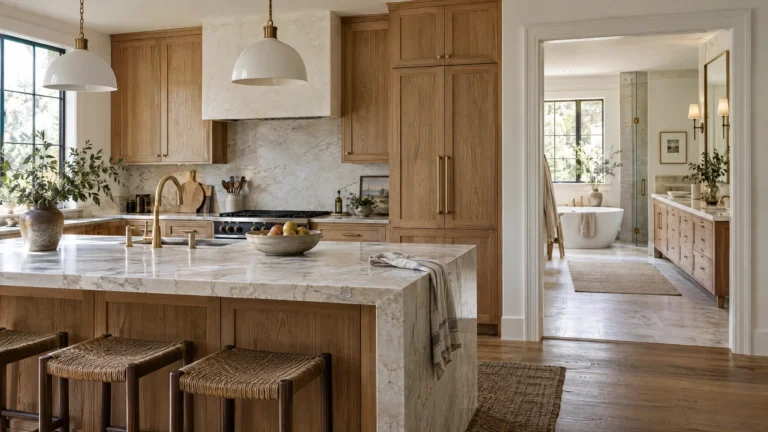
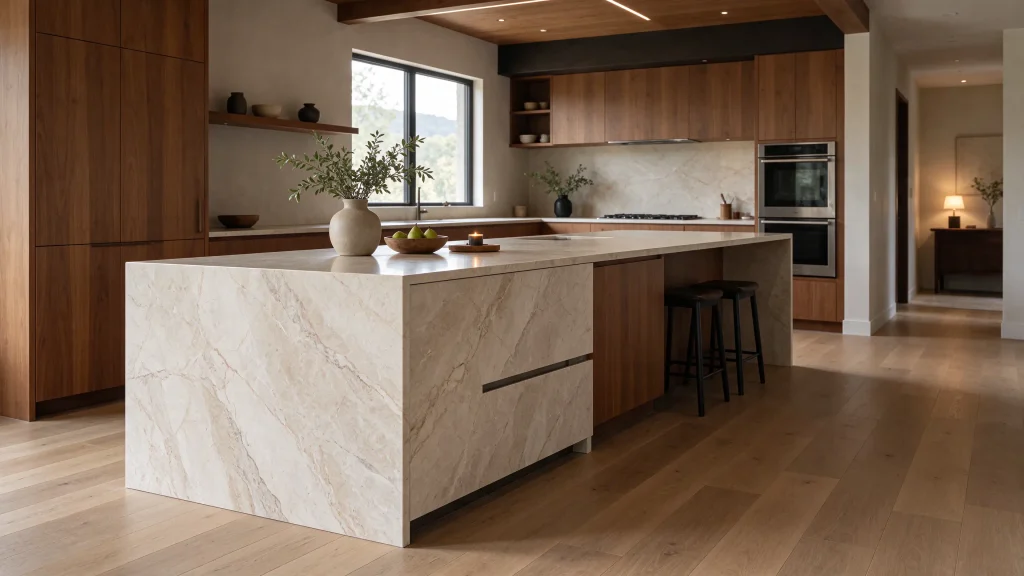
Once considered a coveted feature in homes during the early 2000s and mid-2000s, waterfall islands are finding renewed relevance through more refined modern kitchen trends. Unlike traditional kitchen islands, a waterfall countertop extends vertically down the sides, creating a waterfall edge and seamless look that makes seamless countertops a striking part of modern countertop design. However, today’s homeowners, kitchen designers, and interior design professionals are giving this feature a more practical direction by combining stunning waterfall edges with practical features, functional kitchen design, and clever storage space, including hidden storage, front storage, and concealed storage through no hardware and hardware-free cabinets. Designers such as Linda Hayslett, principal and founder of LH Designs, and John Stivale, designer and co-founder of Stivale Graffam Home, highlight the appeal of thoughtful proportions and subtle detailing, encouraging slimmer edge profiles, slim countertop edges, mitered details, and mitered edges rather than unnecessarily heavy edge profiles. From my design perspective, the best island design considers kitchen proportions, proportion, and restraint, balancing dramatic gestures with refined details to create sophisticated kitchens and contemporary kitchens. Pairing island countertops with stools and comfortable kitchen stools also preserves valuable storage and improves kitchen functionality without sacrificing a clean appearance or minimalist appearance. Ultimately, well-planned waterfall islands bring together countertop trends, kitchen aesthetics, minimalist design, functional features, kitchen storage solutions, architectural details, countertop finishes, and practical elegance through a carefully considered balanced design.
Rounded Countertop Edges for Modern Kitchens
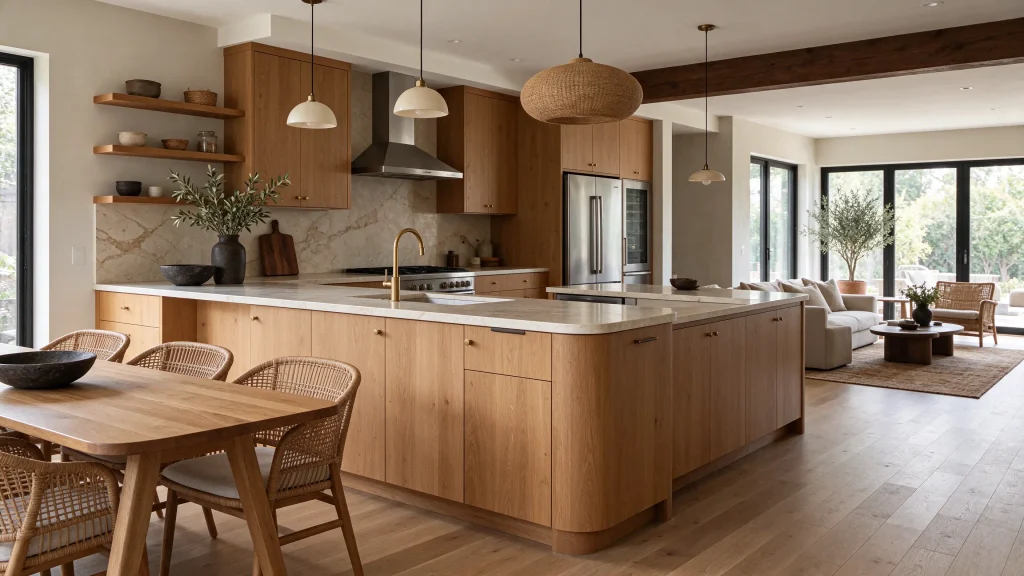
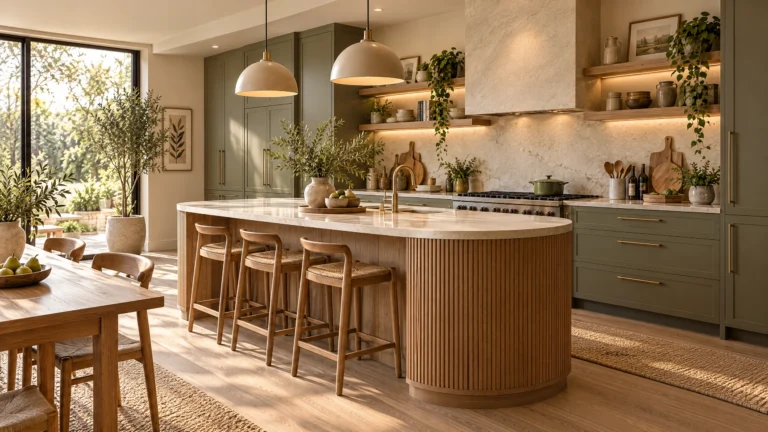
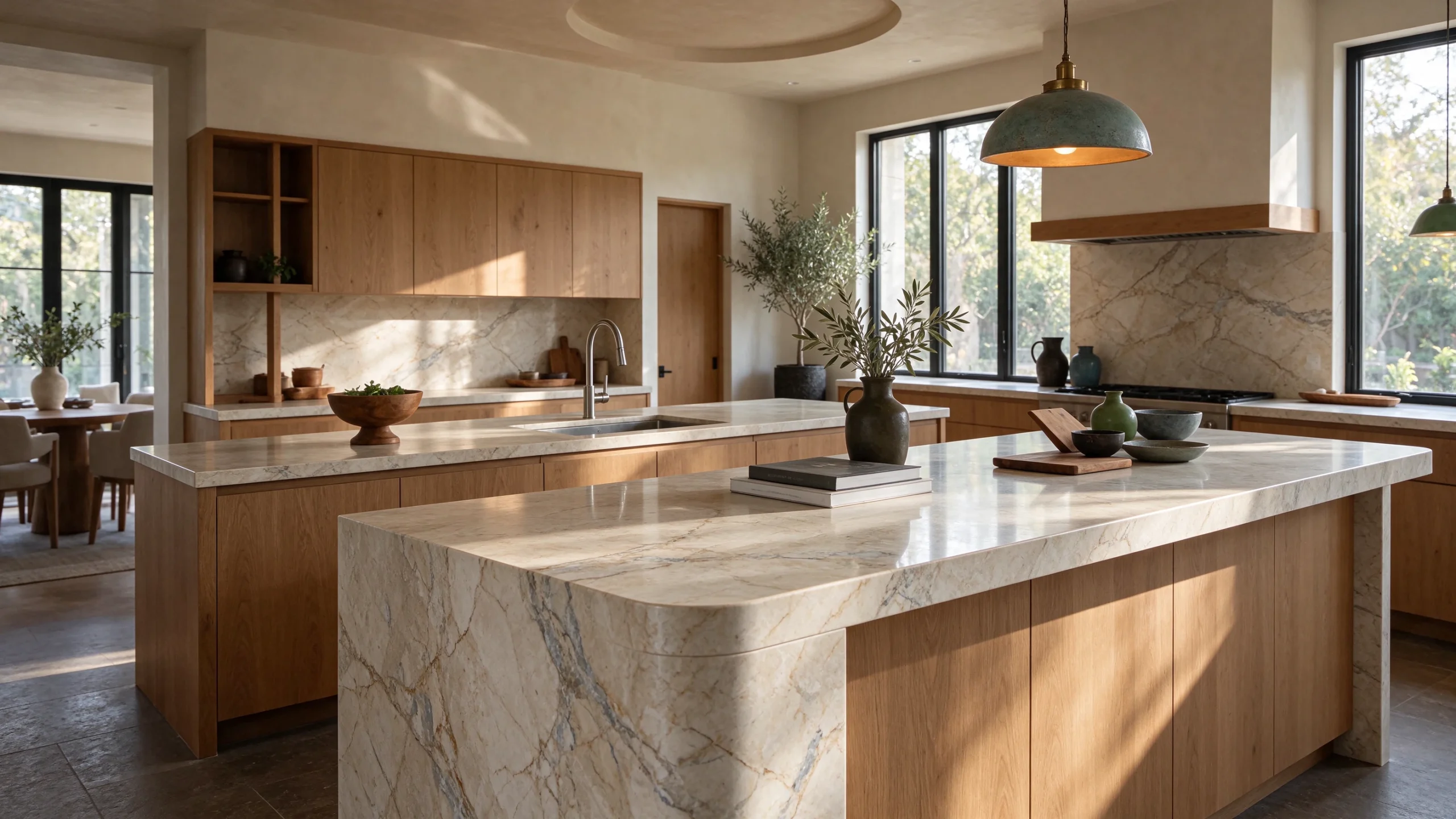
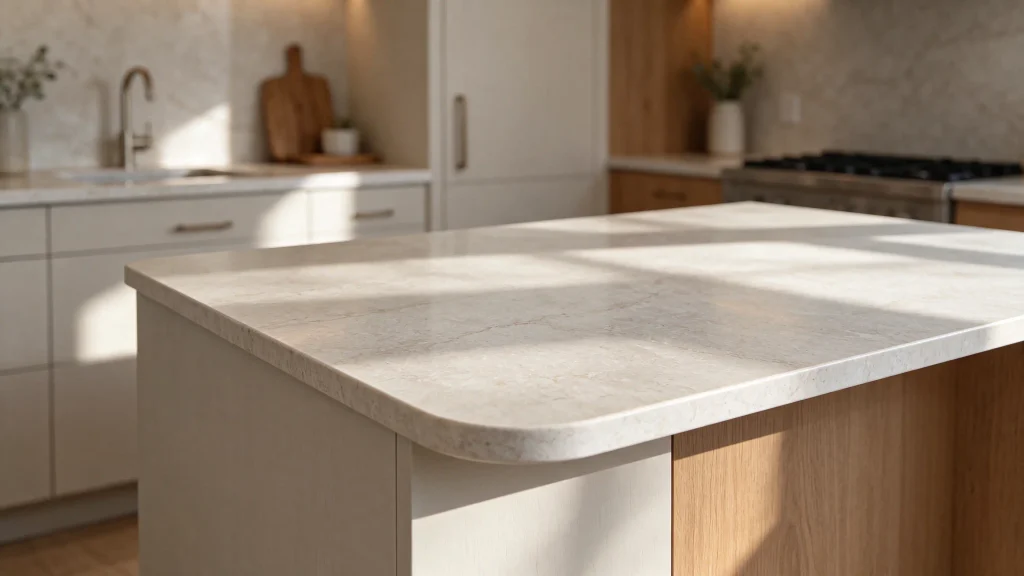
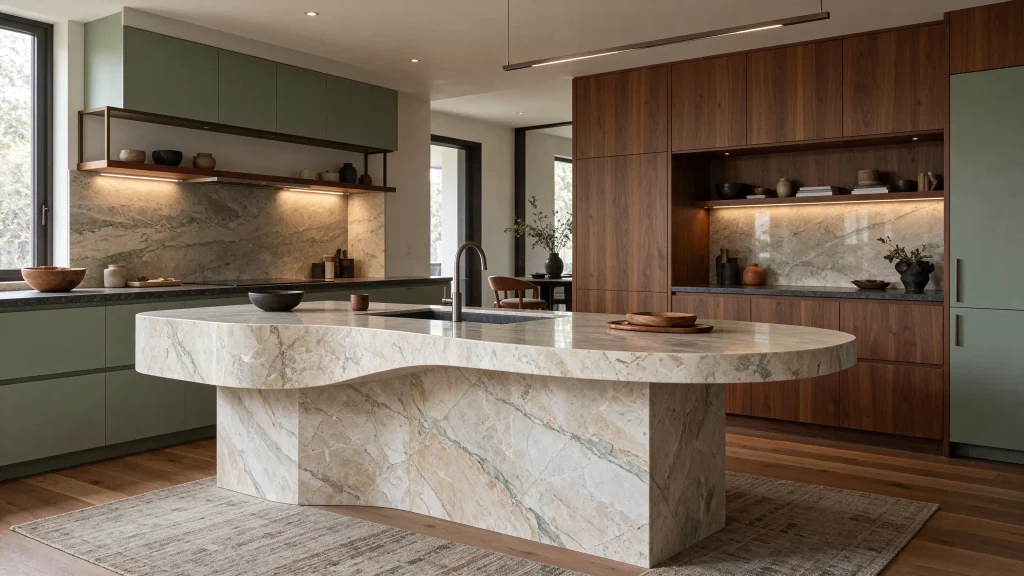
Moving away from the sharp geometry of rectangular countertops and traditional rectangle edges, rounded countertop edges are becoming an appealing choice for modern kitchens and contemporary kitchens. According to the design approach of interior designer Mikel Welch, thoughtful details can transform even builder basic spaces and outdated kitchens into updated kitchens with a more custom appearance. Instead of relying on standard issue and standard profiles, homeowners are exploring bullnose edges, bullnose countertops, softened eased edge, eased edges, subtle pencil edge, and pencil edges to introduce comfortable edges, smooth edges, and softened edges without compromising functionality. From my experience, selecting the right countertop edge profiles is just as important as choosing the surface material, as cleaner profiles, tailored profiles, and streamlined edges can give custom countertops and refined countertops an elevated appearance. These alternative countertop shapes, unusual silhouettes, and carefully crafted countertop silhouettes bring fresh character to kitchen design, while intentional design, countertop detailing, and countertop craftsmanship help balance countertop design, kitchen aesthetics, and evolving countertop trends. Whether choosing minimalist profiles, sophisticated edges, elegant finishes, or refined silhouettes, today’s modern countertop styles emphasize personalized design, custom detailing, and versatile edge treatments that combine practical countertop design, functional surfaces, tactile comfort, and smooth countertop finishes. These details also complement kitchen renovation projects and contemporary interiors, making designer countertops and modern edge styles feel both timeless and distinctive.
Non-Continuous Backsplashes and Countertops
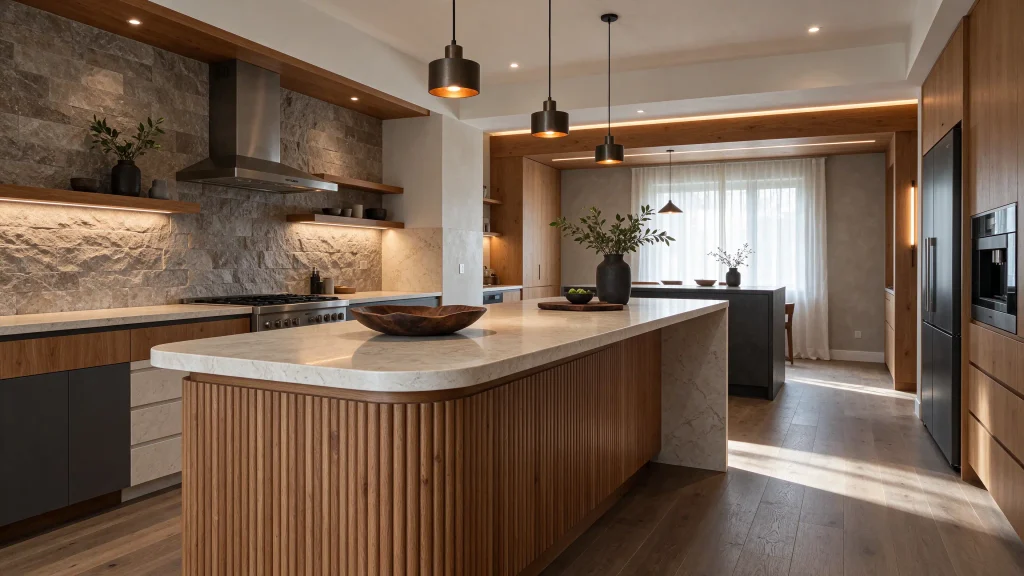
A fresh approach to modern kitchen design is moving away from the traditional continuous backsplash and countertop material continuation, embracing non-continuous backsplash designs that combine countertops, kitchen counters, and backsplash surfaces in more creative ways. While interior design professionals such as Linda Hayslett (Hayslett) recognize the appeal of using a single stone, one stone material, or single piece of stone for a full-height backsplash, stone backsplash, slab backsplash, and seamless backsplash, today’s homeowners are increasingly experimenting with different materials, contrasting materials, and thoughtful material combinations to reflect evolving tastes and changing design preferences. Rather than having stone countertops or natural stone extend continuously across kitchen walls as countertop extending up walls, designers are pairing marble surfaces, quartz surfaces, and carved stone with complementary countertop materials and backsplash materials to create distinctive stone surfaces. In my experience, successful countertop and backsplash coordination does not always require matching materials; complementary materials, material variation, and a carefully balanced color palette can deliver a similar visual effect through matching graining, natural stone grain, and consistent stone graining. Whether coordinating countertop color with backsplash color or introducing a different island material through thoughtful island design and a contrasting kitchen island, the goal is to maintain cohesive kitchen design, unified kitchen surfaces, and a seamless kitchen appearance without sacrificing individuality. These choices bring greater flexibility to kitchen aesthetics, architectural kitchen design, visual continuity, harmonious finishes, coordinated surfaces, and custom kitchen design, making them an exciting direction for kitchen renovation, kitchen styling, countertop trends, and emerging backsplash trends.
High-Contrast Veining in Kitchen Countertops
One of the most striking directions in countertop trends is the growing preference for high-contrast veining, dramatic veining, and oversized veining that turn ordinary countertops into focal points. Whether using natural stone, soft natural stone, marble, marbles, quartzite, or quartzites, today’s kitchen countertops are embracing distinctive countertop veining and expressive stone patterns rather than relying entirely on gentle movement, balanced coloration, or subtle coloration. From my experience, the key to successful countertop design is balancing bold patterns and dramatic patterns with kitchen cabinets, cabinetry, carefully planned lighting, kitchen lighting, and complementary furnishings and kitchen furnishings, allowing interior finishes and evolving furnishings to support the stone rather than compete with it. While competing patterns can overwhelm kitchen design, combining color contrast, distinctive veining patterns, and natural stone textures with softer surfaces, subtle movement, and refined surface details creates visual interest without losing visual balance. This thoughtful material selection brings together kitchen materials, decorative stone, and statement countertops while preserving a timeless foundation, timeless design, and balanced design. Whether choosing marble countertops, quartzite countertops, or understated natural stone, the right combination can achieve understated elegance, refined countertops, and timeless countertops that complement sophisticated kitchens, cohesive design, and harmonious interiors through well-considered interior design, kitchen styling, and kitchen aesthetics.
Moving Beyond All-Neutral Countertop Slabs
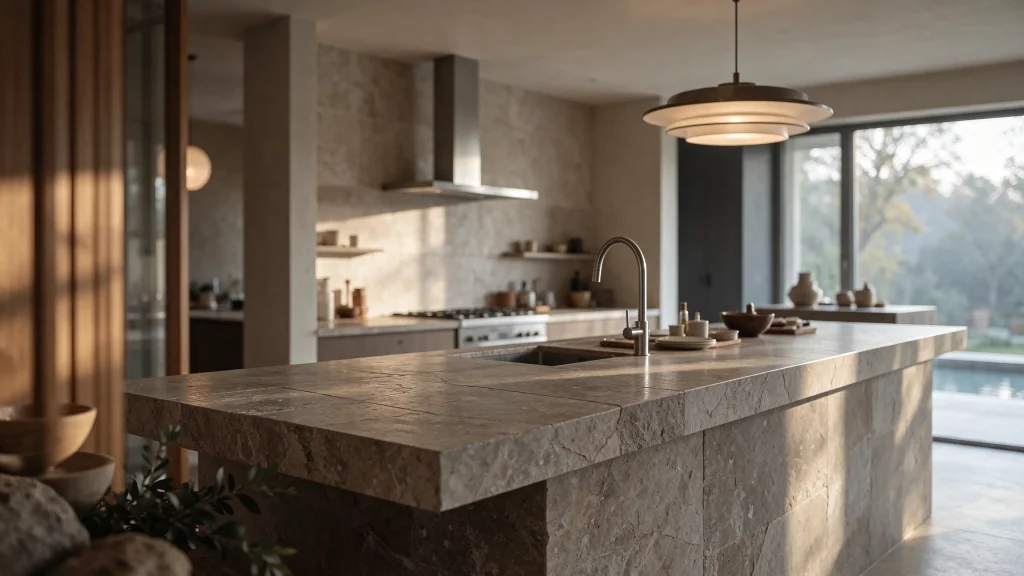
After decades of all-neutral slabs and neutral slabs dominating kitchens, kitchen trends are shifting towards more expressive choices that bring personality to kitchen countertops and countertop slabs. Although neutral countertops, neutral finishes, and light neutrals once defined a clean aesthetic, minimalist aesthetic, and clean kitchen design, relying too heavily on neutral colors, a light color palette, and a minimal look can sometimes create a lacklustre appearance or reinforce outdated aesthetics. As interior design trends evolve, the loss of appeal surrounding safe neutrals has encouraged greater enthusiasm for color, with color trends, colorful kitchens, and expressive colors bringing fresh energy to contemporary kitchens. Rather than abandoning sleek lines, minimalist design, or minimal interiors, designers are introducing sculptural statement pieces, sculptural countertops, statement surfaces, and bold design through inspiring interiors and distinctive kitchen design. Architect Andrew Franz, known for his architectural design, demonstrates how thoughtful material choices can elevate a space, particularly when quartzite, natural quartzite, and quartzite countertops offer attractive alternative materials with high performance, durability, and durable surfaces. From my experience, selecting high-performance countertops, natural stone, and carefully chosen stone slabs makes it easier to balance practical kitchen surfaces with sophisticated countertop materials. These sophisticated materials introduce visual interest, texture, and depth, creating expressive surfaces that strengthen modern kitchen aesthetics through colorful design, thoughtful material selection, and durable kitchen materials while maintaining personalized interiors, timeless design, and distinctive surfaces. This shift also reflects how countertop trends are moving beyond conventional neutral countertops towards kitchens with greater character and individuality.
Dark Stone and Dramatic Countertop Design
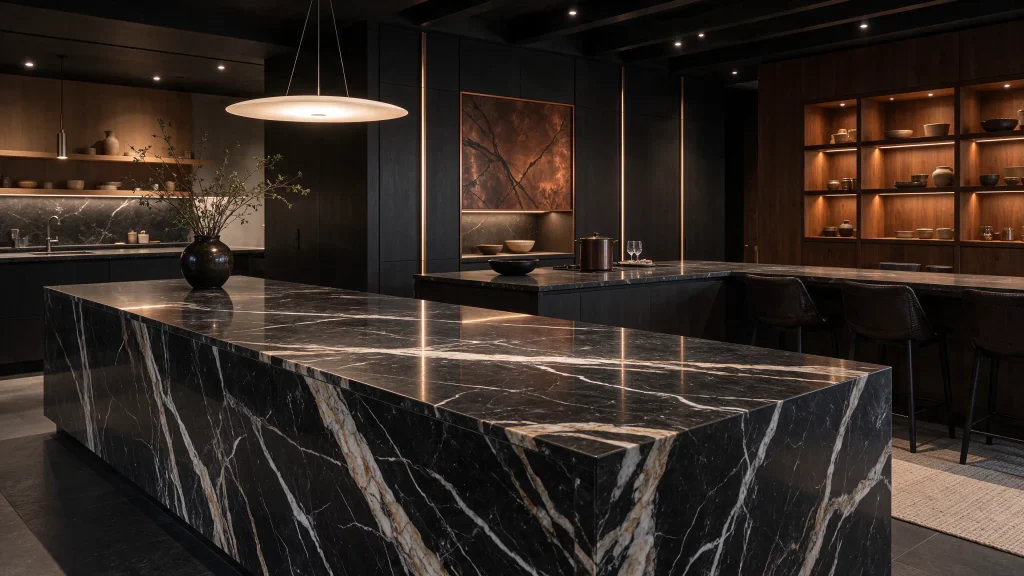
Moving beyond the colorful alternatives to neutral slabs, dark drama is making a powerful impression through black surfaces, black countertops, and dark countertops that bring depth and character to modern spaces. Among the emerging countertop trends and kitchen countertop trends, natural black stone, black stone, and black stone countertops stand out for their dramatic surfaces, striking drama, and visual contrast, especially when bold veining, white veining, crisp white veins, warm cream veining, brown veining, and gold veining break up their deep black tones. At recent industry showcases such as KBIS (kitchen and bath industry show), collections like Porcelanosa’s Negresco collection, part of its black stone collection, and Sensa by Cosentino from Cosentino, featuring Oihana quartzite, quartzite, and black quartzite, demonstrate how white veins, gray tones, cream tones, brown tones, and streaked veining create captivating flowing patterns and marble-inspired aesthetics. From my design perspective, these dark stone surfaces work particularly well in black kitchens, modern kitchens, and contemporary kitchens, where gray accents, cream accents, and brown accents introduce kitchen contrast without overwhelming the overall kitchen design. Whether incorporated into kitchen islands, countertop islands, feature walls, or statement walls, these countertop materials and stone surfaces bring sophisticated finishes to kitchen interiors, bathroom design, bathroom interiors, and other living spaces. Their expressive veining, natural stone patterns, contrasting colors, and bold patterns enhance surface texture, visual depth, and surface depth, producing a dramatic effect and captivating effect through dynamic surfaces, crisp lines, flowing veins, and fine white veining. When paired with thoughtful black finishes, dark finishes, intense tones, light streaks, and flashes of light, they become visually arresting focal points and dramatic focal points. These statement surfaces and architectural surfaces are especially suited to luxury interiors, where premium materials, luxury countertop design, designer countertops, and high-contrast countertops create bold kitchen aesthetics through contemporary stone finishes, decorative stone, premium quartzite, and distinctive stone collections.
Green and Blue Stone as Statement Countertops
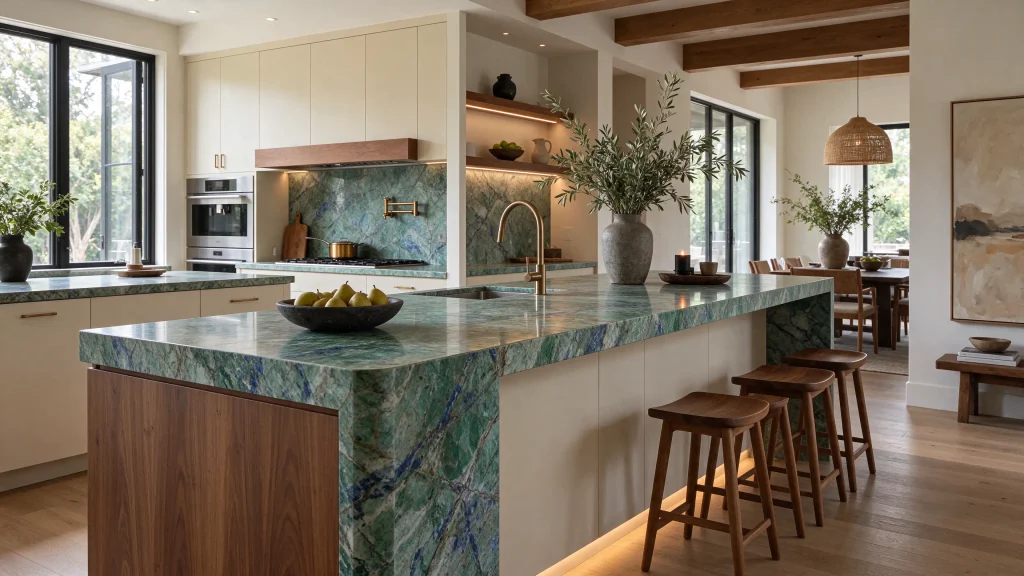
As countertop trends move beyond traditional black and neutral surfaces, green stone, blue stone, and other forms of colored stone are gaining attention as distinctive statement surfaces in modern kitchens. From deep green stone, emerald stone, and ocean blue stone to blue-gray slabs, green slabs, and blue slabs, these natural stone options bring individuality to stone countertops through natural color variations, stone variations, and expressive organic patterns. Today’s kitchen countertop trends increasingly embrace colored countertops, colored stone slabs, and alternative countertop materials, with emerald countertops, blue countertops, and green countertops offering sophisticated surfaces rather than relying on flat decorative color or conventional decorative color. In my experience, the most successful kitchen design schemes balance these bold colors, vibrant colors, rich colors, and jewel tones with painted cabinetry, complementary kitchen cabinets, carefully selected colored cabinetry, and coordinated cabinet finishes. Whether introducing emerald green, ocean-inspired colors, or subtle blue-gray tones, pairing these surfaces with warm neutrals, neutral colors, and warm neutral palettes creates a more refined alternative to mainstream countertop choices. This approach reflects growing accent color trends, where alternative countertop colors, accent colors, and unique stone patterns bring visual interest, natural textures, and an organic appearance to contemporary kitchen design and luxury kitchen design. Particularly suited to luxury homes, upscale interiors, and luxury projects, these distinctive materials support genuinely distinctive design across residential design and interior design projects. With their sophisticated aesthetics, premium stone, and architectural surfaces, they also offer exciting possibilities for statement islands, kitchen islands, custom countertops, and designer kitchens. Thoughtful material selection and natural stone finishes allow high-end kitchens to achieve memorable kitchen aesthetics, colorful interiors, and bold kitchen design through expressive countertops and personalized kitchen spaces.
How Quartz Countertops Are Evolving
Once valued mainly for their consistent appearance, uniform surfaces, and easy maintenance, quartz countertops are taking on a more expressive role in today’s countertop trends. As quartz countertop trends reshape kitchen countertop trends, quartz is moving beyond white backgrounds, simple white surfaces, and predictable veining towards natural veining, marble-inspired patterns, quartzite-inspired patterns, and granite-inspired patterns that recreate the visual appeal of natural stone. With advanced surface technologies, innovative countertop technology, and improved surface manufacturing, countertop manufacturers are developing printed quartz and printed quartz surfaces featuring stronger movement, flowing patterns, sophisticated patterns, and greater visual depth and surface depth. In my experience, these developments make engineered quartz and engineered stone particularly interesting for homeowners seeking natural stone alternatives without sacrificing practical advantages. Today’s quartz countertop trends also embrace warmer color combinations, warm tones, color variations, and stone-inspired designs, creating modern countertops, contemporary countertops, and expressive surfaces that feel less manufactured. Although quartz remains an important countertop choice because of its durable surfaces, low-maintenance countertops, and suitability for everyday kitchens, functional countertops, and improved kitchen functionality, growing increasing attention to evolving countertop designs reflects a desire for more natural character and one-of-a-kind surfaces. For those comparing countertop materials and kitchen surfaces, quartzite, granite, and marble still offer unique stone patterns, while marble countertops, granite countertops, quartzite countertops, and other natural stone countertops provide distinctive alternatives to conventional stone countertops. Choosing between these distinctive materials and premium surfaces ultimately depends on material selection, countertop aesthetics, and the demands of kitchen design; whether planning a kitchen renovation or developing a personalized kitchen design, balancing natural variation, surface patterns, practical countertop materials, and timeless materials helps create a cohesive contemporary kitchen design.
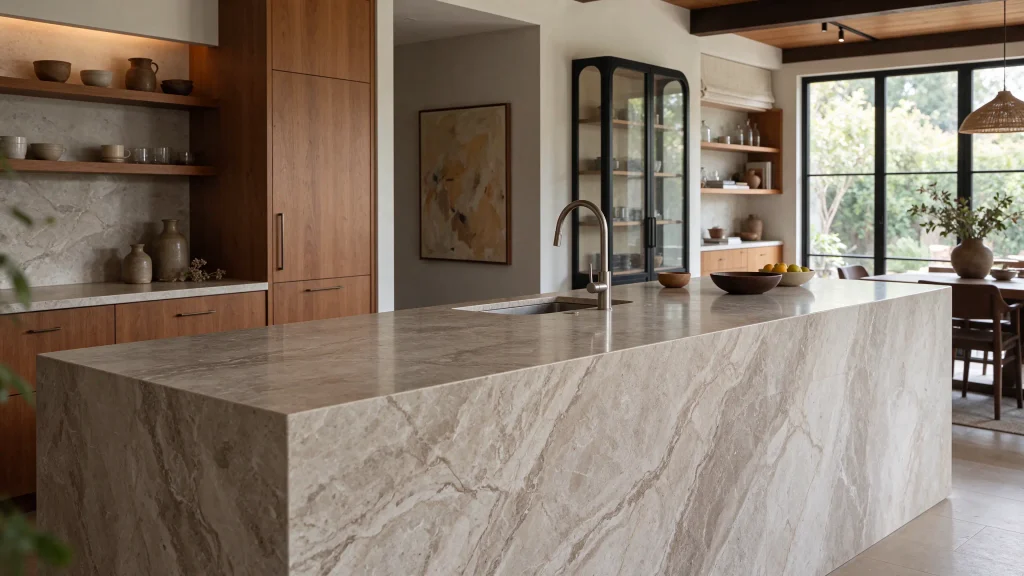
Taj Mahal Quartzite in Kitchen Design
Although Taj Mahal quartzite has gained monumental popularity in recent years, its widespread use is encouraging homeowners and interior designers to explore more individual approaches to countertop design. Particularly common in all-white schemes, white kitchens, white countertops, and clean white spaces, this natural quartzite offers a warm stone appearance that makes it one of the most tasteful alternatives to conventional countertop materials. However, as market trends and interior design trends evolve, relying too heavily on Taj Mahal stone can contribute to countertop overuse, outdated countertop trends, and time-stamped kitchen design in otherwise beautiful dated kitchens. Designers such as Leah Hook, founder and principal designer of Gray Oak Studio, and Andrew Franz encourage a broader appreciation of colorful materials, vibrant materials, and textured materials that bring more personality to modern interiors. From my experience, exploring textured quartzite, quartzite with color, and colorful quartzite alongside expressive stone, leathered natural stone, and leathered stone creates opportunities for distinctive stone texture, natural stone finishes, textural surfaces, and textured countertops. While Taj Mahal quartzite, quartzite countertops, and other stone surfaces remain attractive choices for their ability to complement smooth surfaces, clean spaces, white interiors, and minimalist kitchens, introducing vibrant spaces, colorful kitchens, rich colors, and bold stone patterns adds greater visual interest. For homeowners planning a kitchen renovation, thoughtful material selection can balance warmer stone alternatives, alternative countertop materials, and durable natural materials to achieve inviting warm interiors, distinctive kitchen surfaces, and memorable kitchen aesthetics. These choices also allow designers to create distinctive countertops, sculptural surfaces, and expressive kitchen design while preserving the appeal of timeless materials, contemporary kitchen design, personalized interiors, and evolving countertop styles within broader countertop trends and kitchen countertop trends.
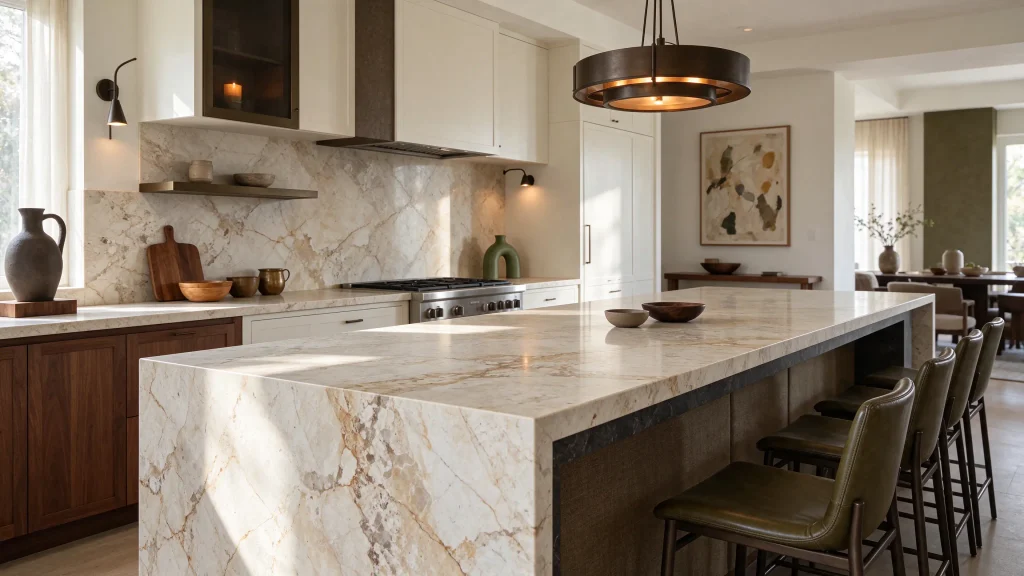
Why Quartzite Defines Luxury Kitchens
What makes quartzite particularly appealing in luxury kitchens is its ability to combine the beauty of natural stone with authentic natural variation, unique stone patterns, and an unmistakable handcrafted appearance. Unlike mass-produced surfaces, natural quartzite offers individual stone slabs, natural stone slabs, and unique slabs, making quartzite countertops one of the most desirable premium countertop materials in today’s countertop trends and kitchen countertop trends. In my experience, the strongest luxury kitchen design schemes treat stone as an architectural statement, using full-height backsplash installations, full-height slab backsplash designs, kitchen island features, island countertops, and waterfall islands to create statement surfaces and distinctive countertops. Warm varieties featuring warm quartzite, creamy backgrounds, cream-colored stone, beige movement, gold movement, and taupe movement bring flowing veining, natural veining, and warm tones into carefully coordinated soft palettes, kitchen color palettes, and neutral palettes. Meanwhile, blue quartzite, green quartzite, dramatically patterned quartzite, colorful quartzite, and other patterned stone options introduce bold stone patterns into contemporary kitchens and modern kitchens. For luxury projects and premium kitchen projects, I recommend prioritizing actual slab selection rather than relying solely on color samples, small samples, countertop samples, or generic stone samples, because scale, vein placement, veining patterns, and stone movement can dramatically influence the visual impact and final result. A carefully selected slab can transform a large kitchen island into a visual center, a memorable focal point, and the ultimate kitchen focal point. This approach supports exclusive kitchen design, customized countertops, and bespoke kitchen design, where sophisticated materials, premium finishes, expressive natural stone, and distinctive surfaces strengthen kitchen aesthetics. Ultimately, quartzite’s enduring appeal lies in its stone craftsmanship, making it a valuable choice for statement countertops, timeless kitchen materials, and thoughtful material selection in sophisticated interior design.
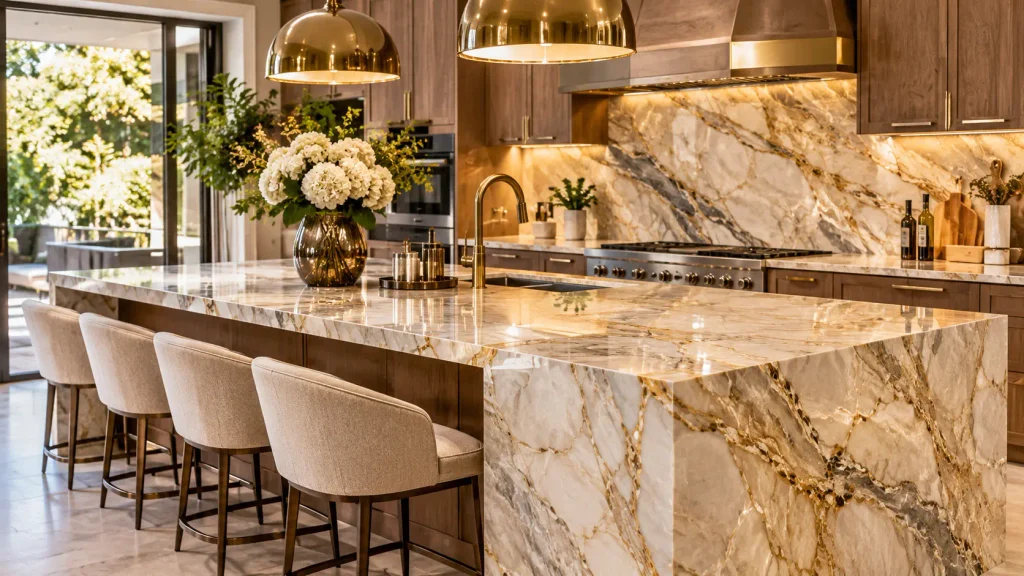
Why Laminate Countertops Are Falling Out of Favor
Although laminate and laminate countertops once appealed to homeowners seeking affordable kitchen countertops, changing countertop trends are shifting attention towards materials that offer greater authenticity, depth, and surface variation. Today’s kitchen design increasingly favors natural materials and mineral-based materials over man-made materials, as homeowners look for more convincing tactile surfaces, distinctive surface texture, and natural light interaction that creates subtle reflection and visual richness. As Kate Hartman (Katie), an interior designer, and other design professionals explore alternatives, outdated laminate and conventional laminate surfaces are losing ground because their printed surfaces, two-dimensional appearance, and often flat surfaces can limit visual appeal, aesthetic appeal, and overall kitchen aesthetics. From my experience, thoughtful material selection matters just as much as countertop color selection, particularly when comparing kitchen countertop colors, countertop finishes, and the durability considerations of different countertop materials. While laminate limitations do not make every alternative automatically superior, porcelain countertops, porcelain surfaces, and porcelain slabs offer attractive man-made countertop options with durable surfaces and balanced durability. Similarly, natural stone, natural stone countertops, marble, marble countertops, quartzite, quartzite countertops, soapstone, and soapstone countertops provide distinctive stone materials and stone surfaces with greater material authenticity. These natural stone alternatives can deliver sophisticated finishes, elegant surfaces, and enduring stone aesthetics, while carefully selected man-made countertop materials can still achieve an effective aesthetic balance. The clear move away from laminate reflects a broader preference for practical materials, practical countertop options, and durable kitchen materials that combine style and function, functional surfaces, kitchen functionality, and reliable countertop performance. Rather than following a decade-long style, homeowners are prioritizing long-lasting design, timeless kitchen design, and timeless materials that complement contemporary kitchens, evolving modern kitchen trends, and thoughtful countertop design. For anyone planning a kitchen renovation, the best countertop selection balances durability, practical design, and high-performance countertops without overlooking the character and finish of the overall kitchen.
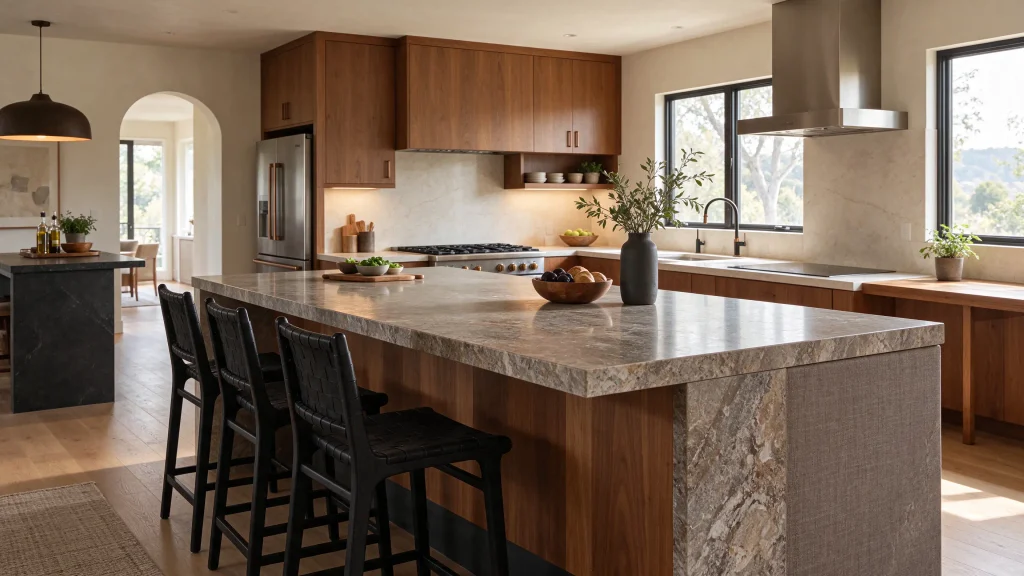
Timber Overload in Kitchen Design
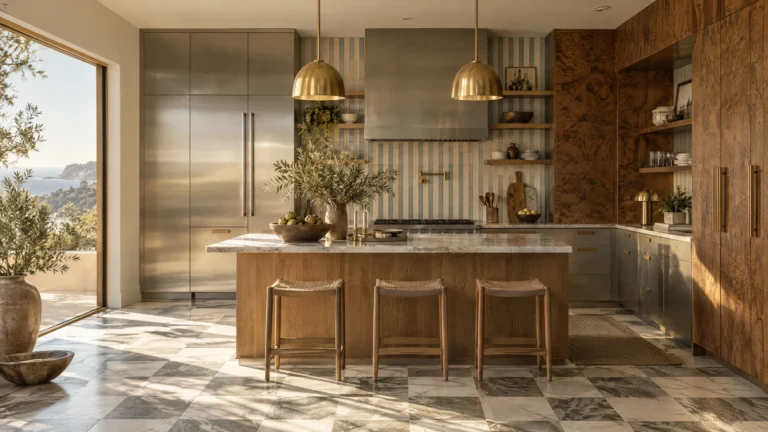
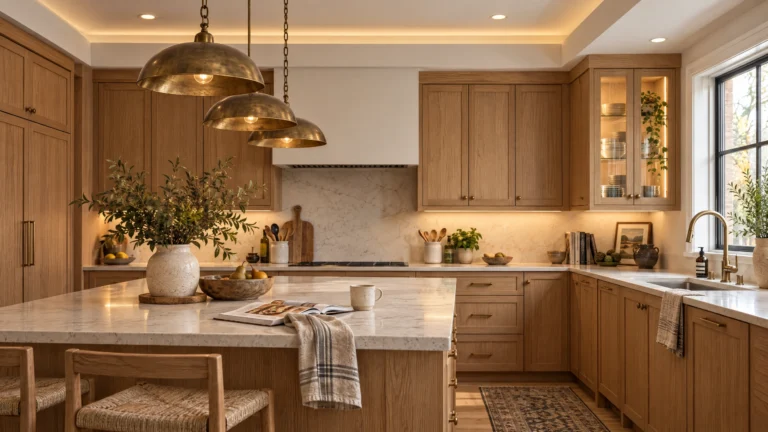
While wooden kitchens, oak cabinets, and wooden cabinetry continue to offer warmth and character, using timber across every surface can make even luxury kitchens feel visually repetitive. Today’s countertop trends and kitchen countertop trends are moving towards a more balanced approach, particularly as designers reconsider wooden countertops, timber countertops, and the use of wooden surfaces as the full countertop surface. Although solid wood countertops, timber surfaces, and natural wood finishes suit country kitchens, rustic kitchens, and farmhouse kitchens, their maintenance requirements, countertop maintenance, countertop care, and long-term durability make careful material selection essential. Isabella Pacelli, Junior Sales Designer at Roundhouse Design, and other designers demonstrate why combining natural materials can create more interesting results than relying exclusively on timber. From my experience, a mixed countertop material approach using mixed materials, contrasting materials, and thoughtful countertop combinations introduces greater variety through wood and stone, natural stone, and stone countertops. Pairing timber and natural stone creates attractive layered materials, material layering, and layered countertops, while contrasting surfaces and complementary materials prevent wooden kitchen ideas and wooden countertop ideas from overwhelming the space. Choosing a neutral material or versatile material alongside warm wood tones and natural textures also supports timeless design choices, timeless kitchen design, and evolving kitchen design trends. This combination maintains the visual appeal of stylish kitchens while creating an easy on the eye arrangement with sophisticated finishes, functional surfaces, and practical materials. Whether planning a kitchen renovation, refining kitchen styling, or developing a natural kitchen design, balancing kitchen aesthetics, kitchen interiors, and countertop design through carefully selected kitchen surfaces and material combinations helps achieve a more cohesive luxury kitchen design and balanced kitchen design across contemporary kitchens.