
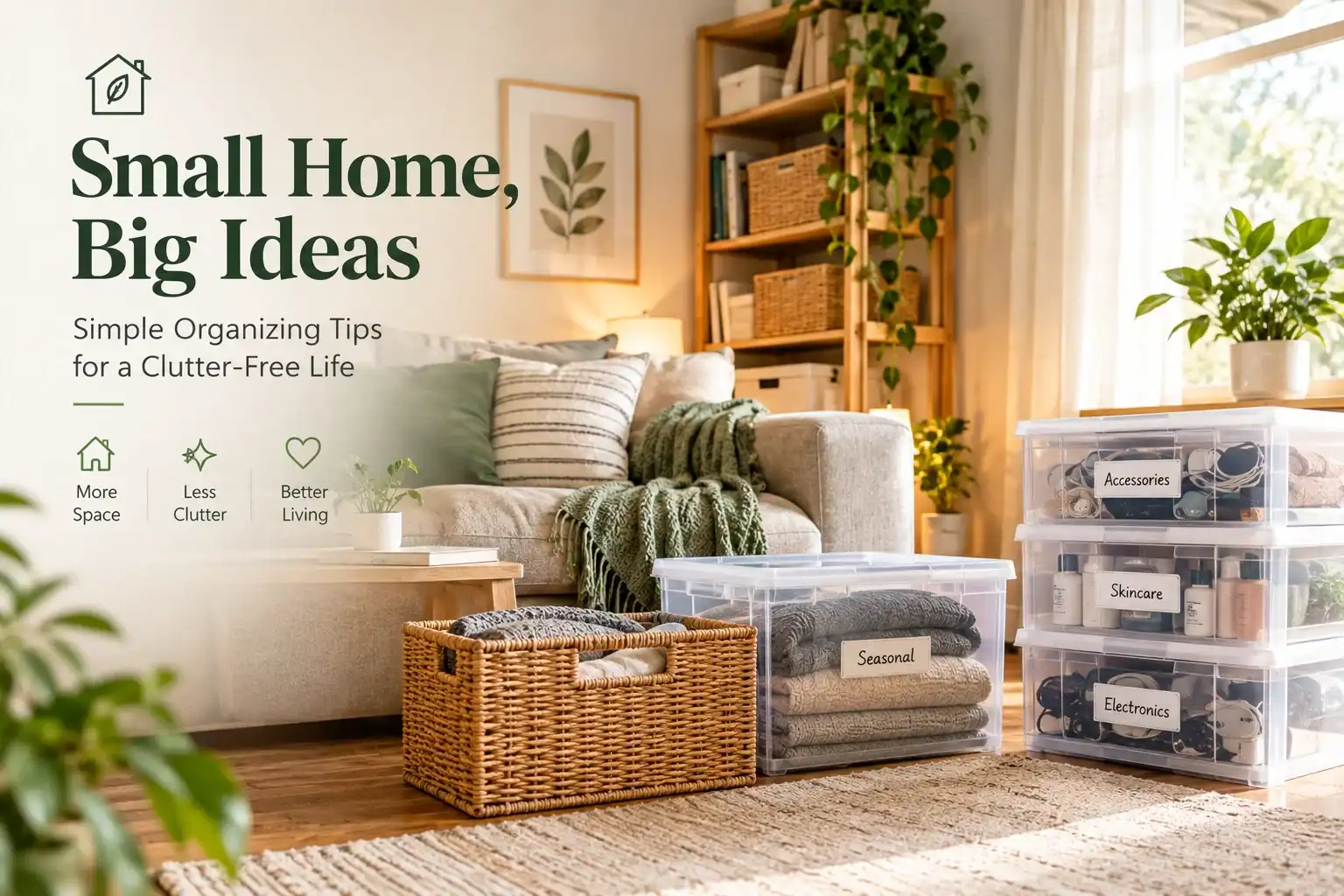
Small Home Organization Ideas: Smart Storage Solutions for Every Room
In my experience, small home organization ideas work best when every item has a clear place rather than simply adding more storage. Whether you live in an apartment or have a compact living space, smart organizing can make a noticeable difference regardless of the size of your home. The most practical storage solutions are those that keep everyday essentials accessible while helping each room stay organized without making it feel crowded.
The right organization ideas do not have to be complicated. A few well-chosen organizing must-haves can turn awkward corners into useful areas and make a small space easier to manage. From flexible solutions that use vertical areas to simple ways of grouping belongings, thoughtful home organization creates order without sacrificing comfort or style.
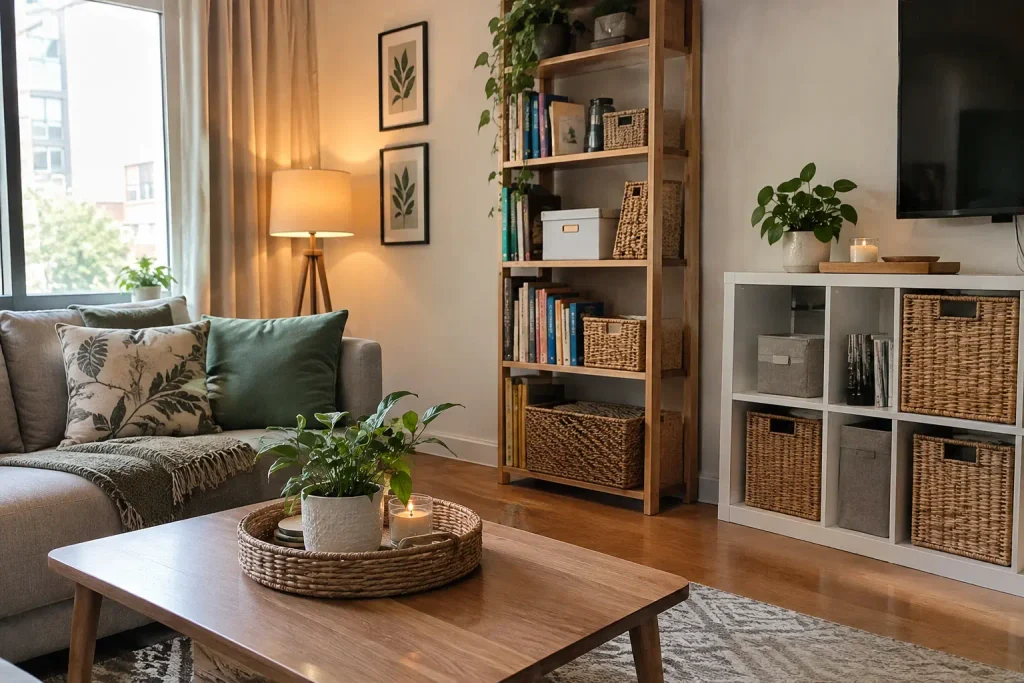
Small Home Organization Ideas for Smart Storage Solutions
Use Vertical Space for Small Home Organization
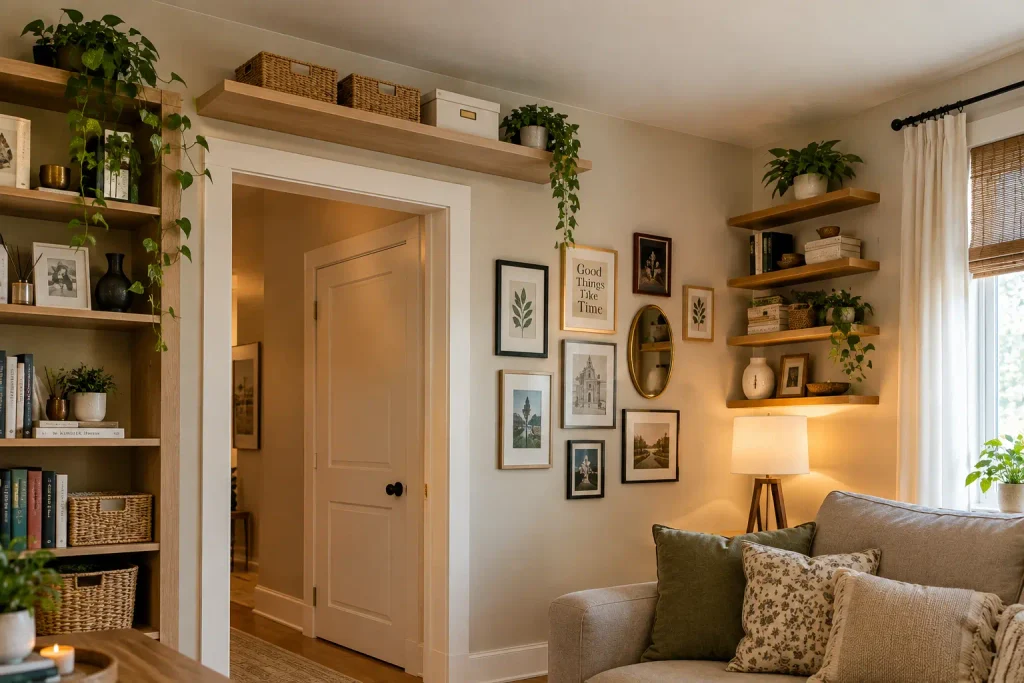
One of the easiest lessons I’ve learned in home organization is to stop looking only at floor-level spaces and start using the vertical ones. In a small home or small space, the areas above windows and doors can become a useful storage-friendly spot for things you do not need every day. A slim shelf, floating storage, or a few stylish boxes can turn these awkward spaces into practical areas without making the room feel cramped. I especially like using boxes for seasonal items, spare linens, and small knickknacks, keeping everything contained while preserving a clean look.
Going vertical can also add personality instead of making organization feel purely functional. A wall can become a picture wall where you showcase favorite flea market finds, while shelves can hold flea market treasures alongside decorative market finds. This balance of storage-friendly features and personalization helps spruce up the room while making better use of otherwise forgotten areas.
Divide Small Rooms into Functional Zones
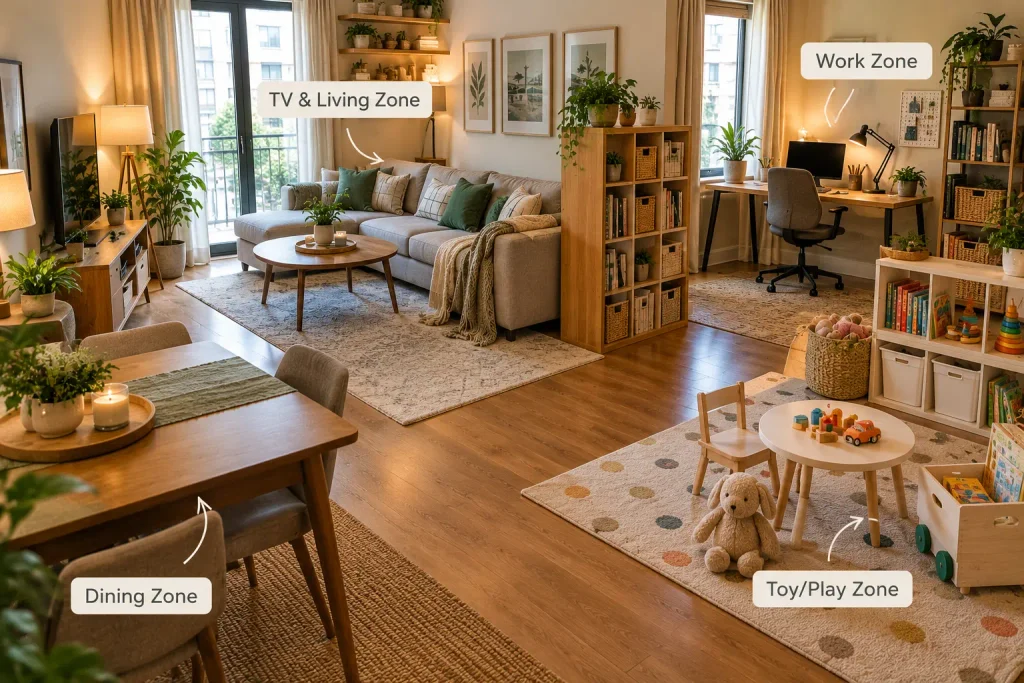
In a small space, you do not always need a dedicated room for every activity; giving one room several clear zones can work just as well. In my experience, dividing the living space according to different purposes makes organizing much easier. For example, a living room can include a dining room, toy area, and work zone while remaining an inviting main living space. A defined activity zone for TV watching space, hanging out, and family bonding can preserve a comfortable family space, while a separate workspace keeps work from taking over the rest of the home. A simple zone setup also makes it easier to create separate spaces without adding walls. In a one bedroom apartment, a secretary desk can establish an office or work zone, while a room divider or strategically placed furniture can mark a designated area. Even a little corner can become a playroom or toy zone for toys and daughters’ stuff, giving children their own place while keeping the current house more organized. A door can naturally define boundaries where available, but it is not essential when the room zones are arranged around their intended function.
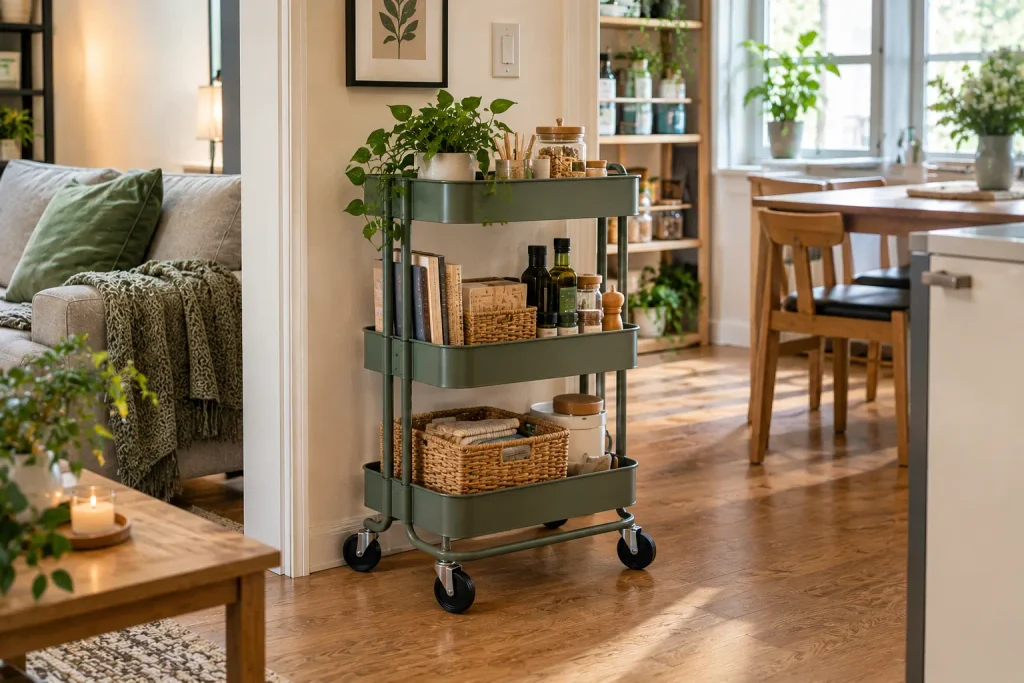
For storage, I prefer solutions that can adapt when the zones need to change. Rolling carts, including an IKEA RASKOG, offer a decent amount of storage capacity in a small footprint and can be moved out of the way when the area needs more floor space. Flexible storage, movable storage, and compact storage make a multifunctional room more space-saving, especially when one corner must serve more than one separate function. This approach provides the perks of better organization without permanently committing the home to one arrangement. The key is to match each area to how you actually use it, rather than forcing different rooms to perform roles they cannot accommodate. Whether the full side of a room becomes a toy organization area or a desk creates a practical work zone, thoughtful space management helps control clutter and supports free time as well as everyday routines. With this kind of home organization, the goal is an efficient use of space that lets a small home feel purposeful, flexible, and comfortable.
Use Rolling Carts for Flexible Storage
A cart on castors can become a surprisingly useful workhorse in a small home, particularly when ordinary furniture cannot stay in one place. I’ve found that movable storage works best when it is suitable for the way each room is actually used: a stylish cart can hold daily household essentials near where they are needed, then roll elsewhere when the room changes purpose. This keeps important items close at hand while preserving accessibility without filling the floor with permanent pieces.
For flexible home organization, I prefer mobile storage and practical furniture that can adapt instead of forcing the home to adapt around it. Multifunctional furniture can provide compact storage and a space-saving organization solution, especially when a cart can be shifted between work, dining, or living areas. The simple rhythm is to store, move, and repeat according to changing needs, keeping organization functional without making a small home feel overloaded.
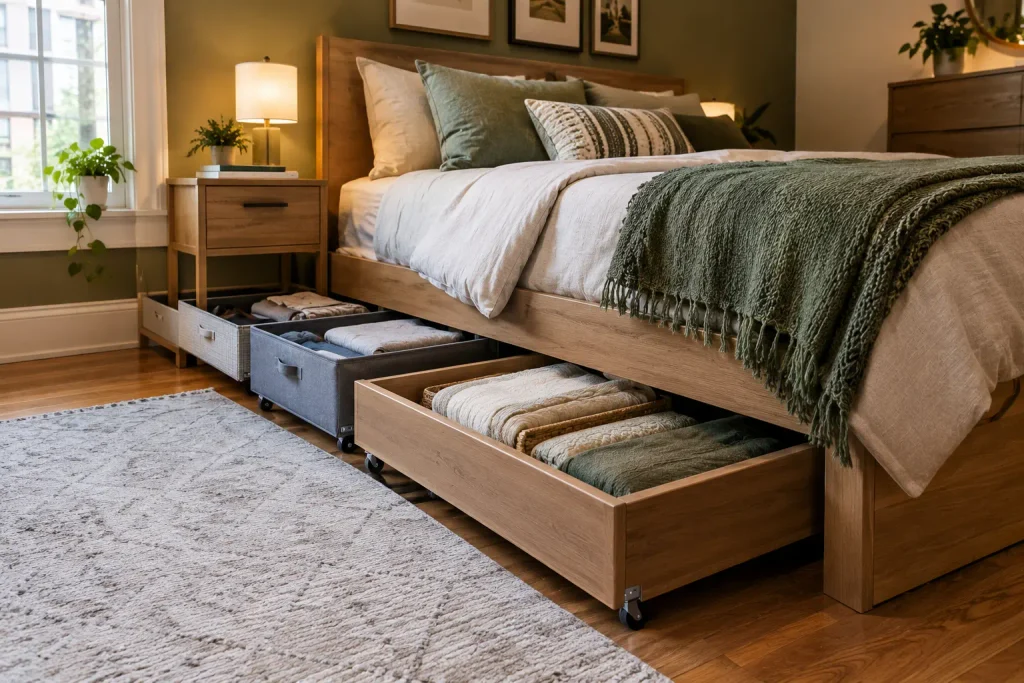
Maximize Under-Bed Storage Space
When floor space is limited, under the bed storage turns overlooked under-bed space into useful storage space without taking up another corner of the small home. In my experience, adding bed risers can create more room for low storage, while decorative bins, baskets, or decorative baskets keep everything contained and easy to pull out. This approach to bed storage is especially useful for a comforter, larger comforter, suitcases, clothes, or additional clothes that are needed occasionally but do not deserve prime bedroom storage space.
For practical home organization in a small space, under-bed storage can also hold shoes, pots, pans, or other household items that would otherwise create clutter. Choosing the right storage solutions makes this form of hidden storage an easy space-saving option, giving you extra storage while keeping everyday organizing simple. I find it particularly effective when items are grouped by use, so these organization ideas make the most of the space beneath the bed without turning it into a forgotten storage pile.
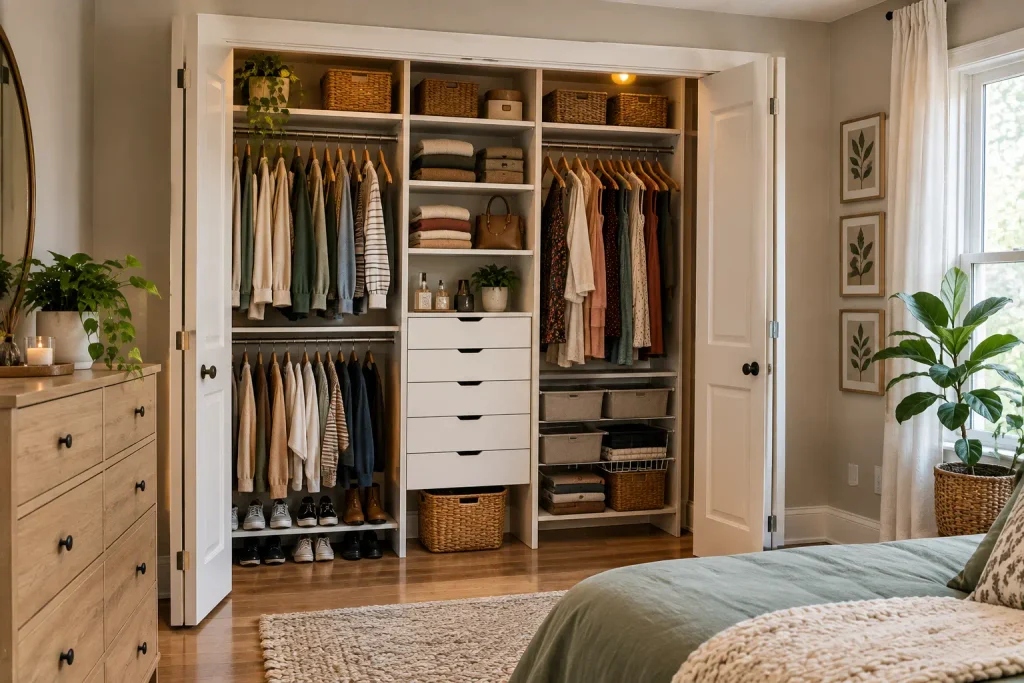
Maximize Closet Space in a Small Home
Making the most of closet space is often less about adding more storage and more about seeing how much storage space already exists. In my experience, a tight space such as a bedroom, shared room, or entry closet can hold considerably more when you maximize space vertically and utilize space at the bottom of a closet, around a shelf, and in other empty space. A closet can accommodate more clothes and everyday items, while dressers provide extra dresser storage where built-in closet systems are limited. This kind of closet organization, closet storage, and bedroom storage reduces wasted space without making the room feel crowded.
The same principle can transform a pantry, craft room, or former pantry into useful storage. A minuscule pantry can gain capacity through smart shelving, while a craft room benefits from dedicated craft storage and a pantry can become a practical permanent pantry with better pantry storage. Depending on the current house, a permanent closet system may be worthwhile, but smaller homes often benefit from flexible storage solutions instead. Even ideas shared by neighbors in a townhouse can inspire useful adaptations for a living room, where a small cube unit can provide toy storage for kids’ toys without taking over the space.
For effective home organization in a small home, the goal is to make every area reach its fullest potential rather than simply filling it with containers. Combining shelving, dresser storage, closet storage, and movable or compact options creates better space optimization while keeping organizing manageable. Whether you need storage, a permanent closet system, or a simple way to reclaim empty space, thoughtful organization allows each room to work harder without sacrificing comfort.
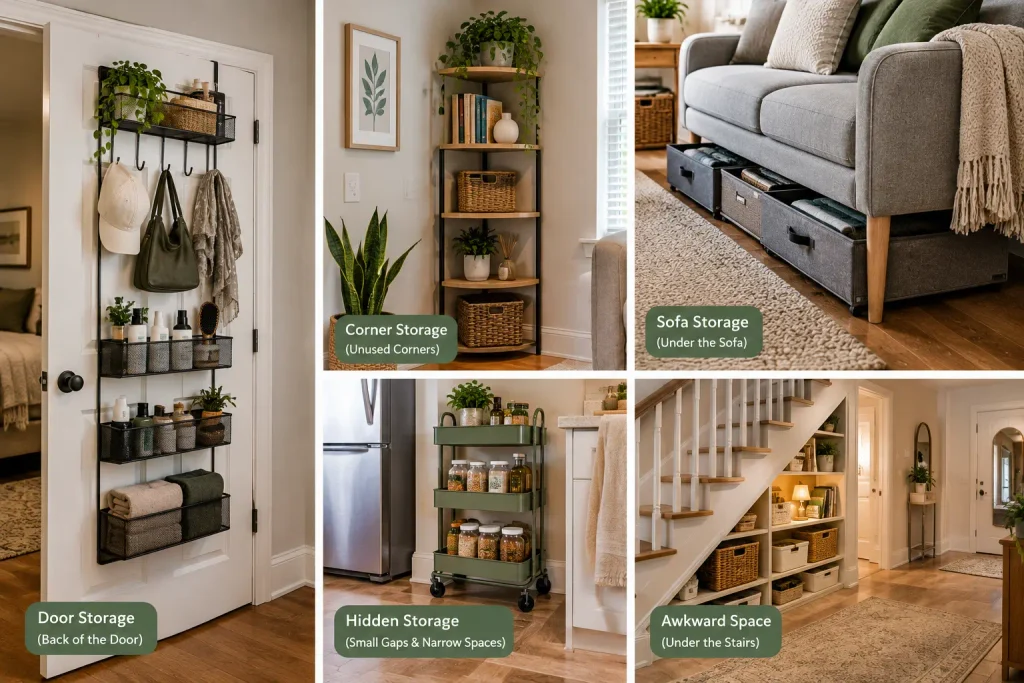
Make Use of Unused Spaces
Even the smallest homes have more possibilities than they first appear to offer; the trick is noticing unused space before buying more furniture. I’ve found that the back of a door, awkward corners, and the gap underneath your sofa can become useful areas for storage with simple space-saving adjustments. Door storage, corner storage, and sofa storage are particularly effective because they turn dead space into practical spaces of convenience without taking valuable floor area. These storage ideas are easy to adapt and can give everyday belongings a designated place while keeping the home visually calmer.
The same mindset makes home organization more flexible because not every storage area needs to be obvious. Hidden storage can fit into awkward spaces, while clever storage solutions can transform neglected spots according to their function. For me, good organization solutions are the ones that combine convenience with functionality, such as using an overlooked corner for baskets or the back of a door for frequently used items. This kind of clever organization helps a small home make better use of what is already there rather than constantly searching for additional space. Once you have made better use of unused areas, you can add warmth and personality to your home with these budget decor ideas for small spaces.
Utilize Doors for Extra Storage
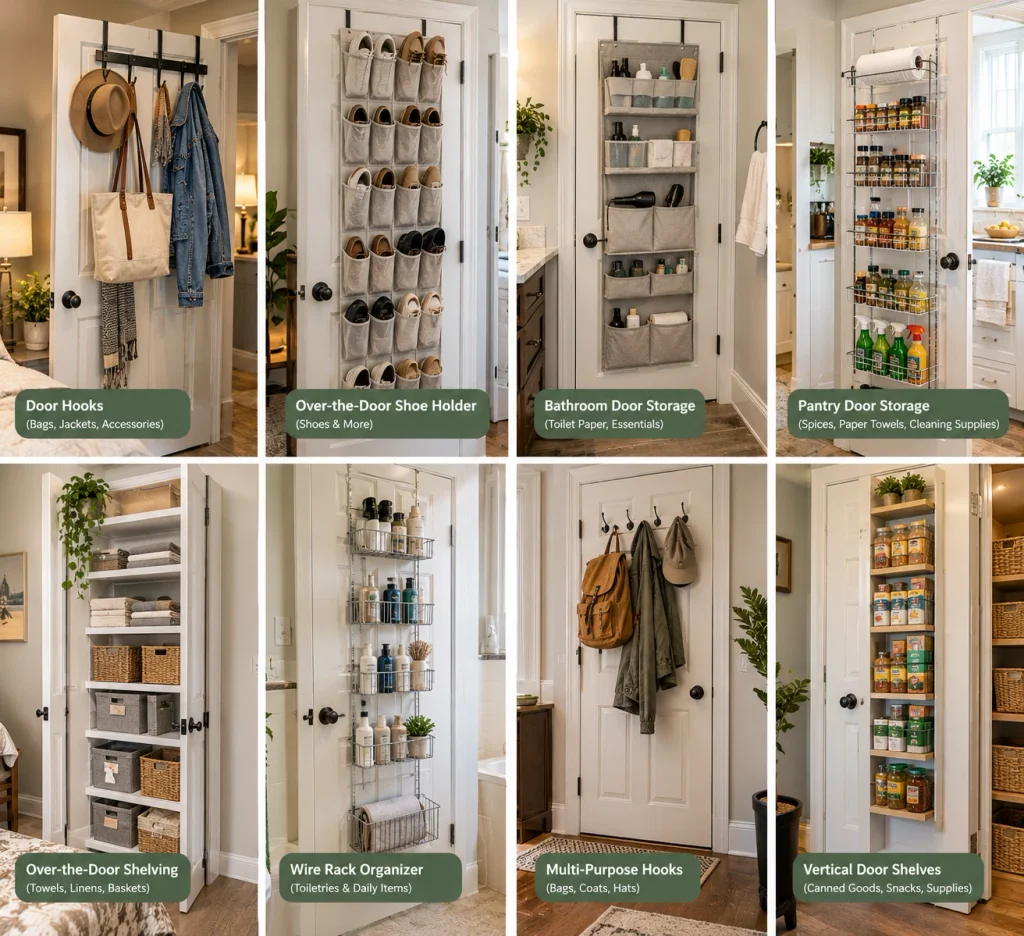
The doors throughout a small home can provide surprisingly useful extra storage when you take advantage of their unused surfaces. I’ve found that hanging storage, hooks, door storage, and over-the-door shoe holders are simple space-saving choices for bags, shoes, and jackets. In a bathroom, the back of doors can hold toilet paper and other essentials, while door organization keeps frequently used items accessible without consuming floor space. This makes the power of a door especially valuable when conventional storage solutions are limited.
For larger storage needs, vertical storage can be created with shelving, shelving racks, or wire racks. In a kitchen pantry or pantry, shelving/wire rack solutions can organize paper towel, spices, cleaning supplies, and other everyday items. Amazon also offers many ready-made shelving solutions designed for back of doors, making it easier to add closet organization without permanent changes. Whether you use wire racks, hooks, or shelving racks, thoughtful home organization turns overlooked door surfaces into functional storage areas.
Keep Items Off the Floor
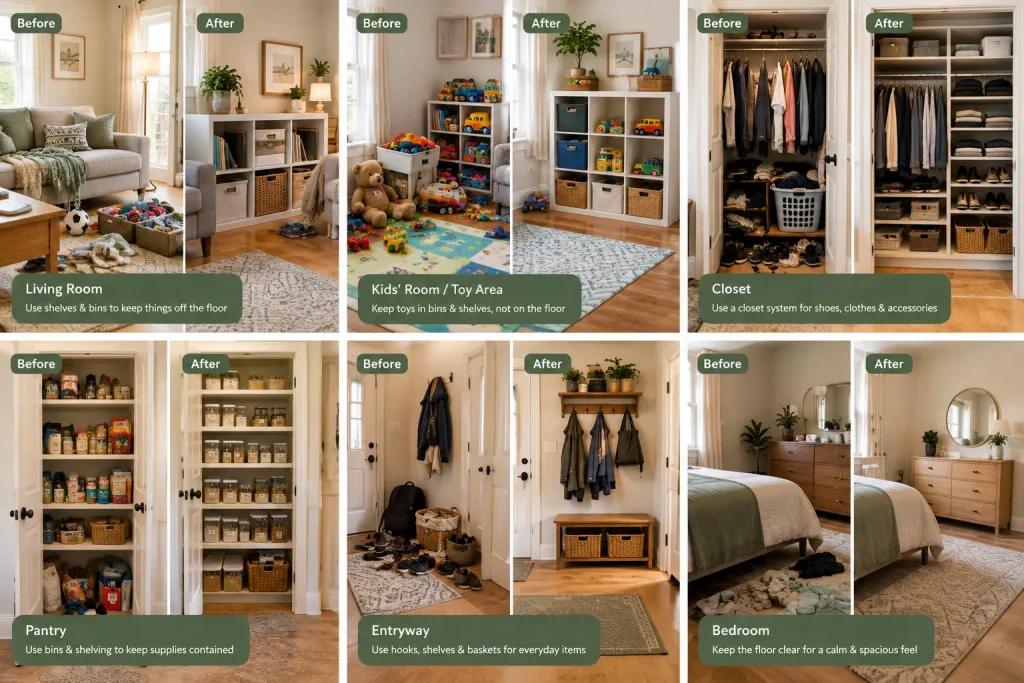
One of the most effective small space living habits I’ve picked up is to stop treating the floor as default storage space. In a small home, loose items and everyday stuff can quickly make a room look messy, especially when the corner becomes a dumping ground. A practical small space living tip is to use shelving, bins, and shelving units to lift belongings off the ground. Inexpensive shelving units can create a dedicated toy space for Cs’ toy space and big toys, while thoughtful storage solutions keep the room organized without sacrificing useful floor area. If an area remains cluttered, purging what you no longer need is often the quickest way to restore order.
Closets benefit from the same approach. In my previous rental home, I learned that a closet system could make a dramatic difference by replacing a free-for-all closet floor with defined sections for shoes, clothes, and accessories. A master closet can use shoe storage, organized shoes, shelving, and bins, while pantry bins keep supplies contained rather than scattered. Even WalMart storage products can provide inexpensive options for floor organization. Keeping furniture, rugs, and floor storage purposeful rather than allowing them to compete with loose belongings makes home organization and small home organization much more space-saving and manageable.
Organize Small Items with Compact Storage
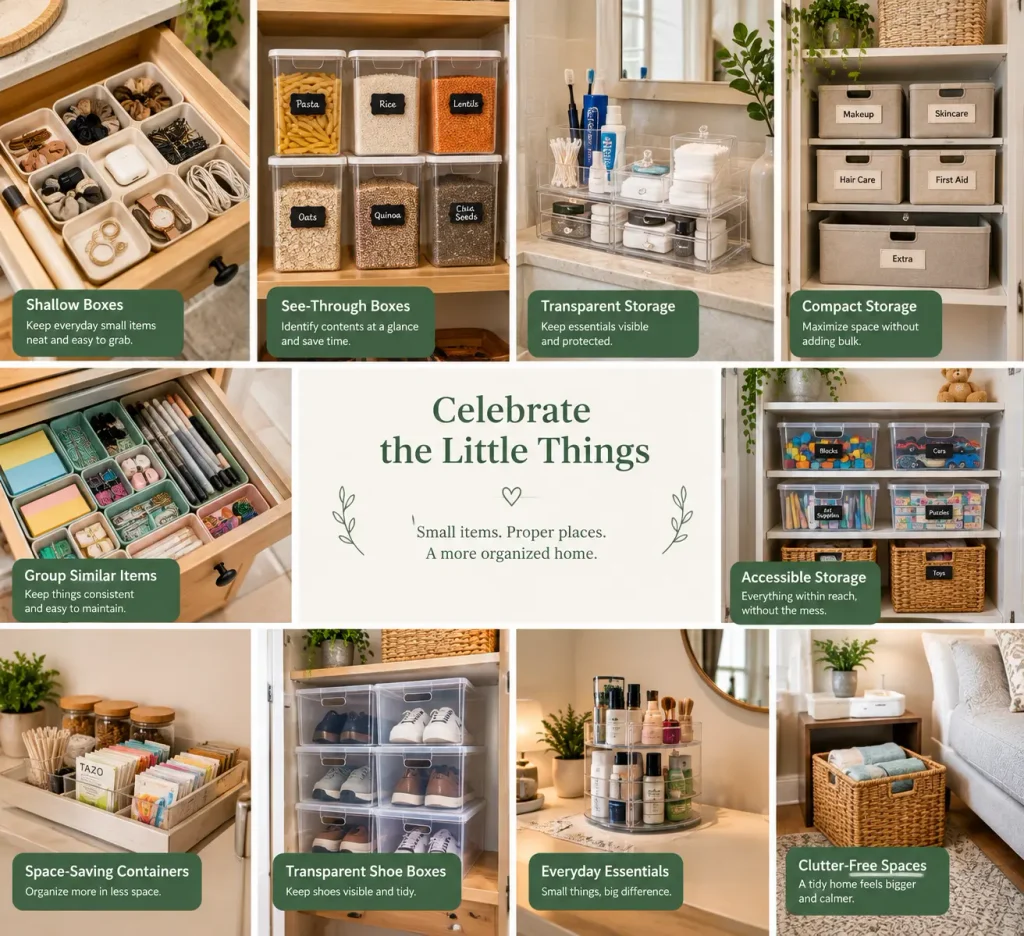
In a small home, the smallest items can create the most noticeable clutter, so I’ve found that giving life’s smaller things a proper place makes everyday organizing much easier. Instead of letting small items disappear into random drawers, use shallow boxes for things you reach for often and see-through boxes when you need to identify contents at a glance. This simple approach to item organization keeps your home easier to organize while making storage more intentional.
For effective home organization, choose storage solutions that make belongings both protected and accessible. Transparent storage, accessible storage, and compact storage can keep small essentials visible without taking over valuable space, while space-saving containers create easy-to-find storage without adding unnecessary bulk. I especially like grouping similar boxes together, because this keeps organization consistent and makes it easier to maintain order as new items enter the home.
Declutter Your Home and Let Go of Unnecessary Items
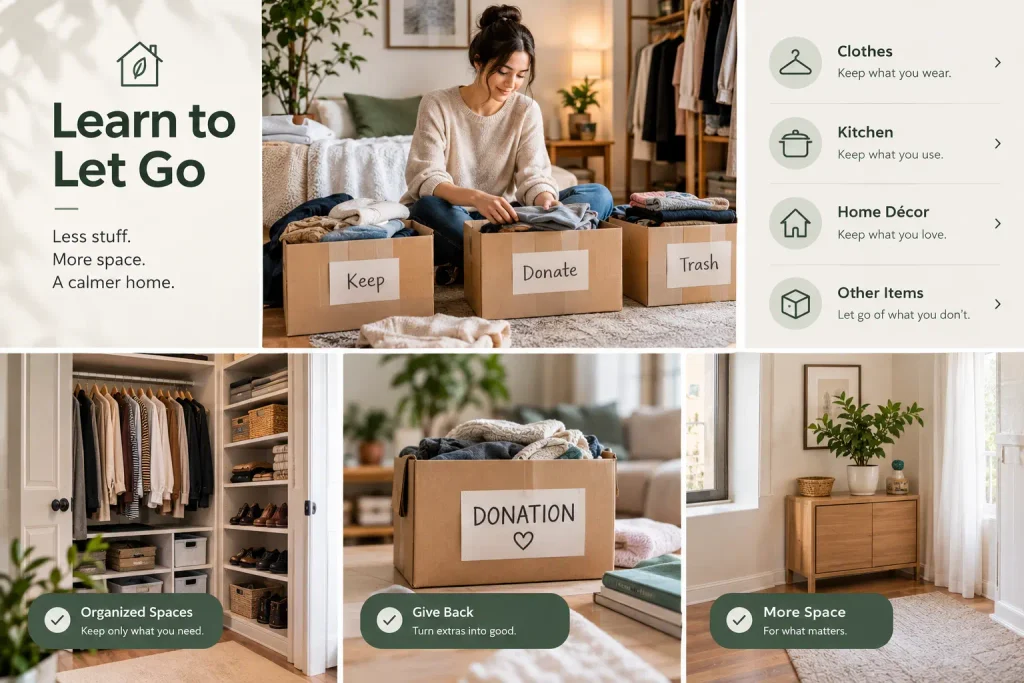
One of the most useful tips I’ve learned for a small home is that effective decluttering often starts with deciding what to let go of rather than finding more storage. Every 6 months, I like to review clothes, kitchen items, decor, and other belongings, asking honestly whether I still use them. Removing unnecessary items, unwanted items, items you don’t need, and unused items can quickly reduce clutter and make the home organization process easier. These important tips are simple, but they can make a noticeable difference when you need to organize a home with limited space.
The key is to make honest decluttering part of a regular decluttering routine instead of treating it as a one-time task. Usable things can go to local donation centers or other donation centers, turning excess possessions into meaningful donations rather than letting them occupy valuable space. I find that these small hacks make it easier to simplify what remains, maintain organization, and apply practical home organization ideas without constantly adding containers. This approach keeps everyday spaces more space-saving while making it easier to maintain order over time.
One Comment